

The highly anticipated return to the fog-shrouded streets arrives with Silent Hill f, but PC gamers are rightfully asking: Does it run well? Based on extensive analysis of the Unreal Engine 5 title's behavior, the answer is nuanced. While Silent Hill f can deliver a decent and immersive experience on capable systems, its performance is heavily dependent on your PC hardware and crucial optimization settings. This guide provides an authoritative, experience-based breakdown to help you achieve the smoothest journey into its nightmare.
Silent Hill f PC Performance: The Quick Verdict
Silent Hill f runs decently on mid-to-high-end PCs post-launch patches, but struggles on lower-end hardware. Initial versions had notable performance issues, but leveraging modern upscaling technologies like DLSS or FSR with a strong GPU can result in a smooth 60 FPS experience with minimal interruption. The game's use of Unreal Engine 5 means shader compilation stutter can affect initial playthroughs, a common challenge with the engine.
Optimizing Silent Hill f for a High-End Gaming PC
For players with modern rigs (e.g., RTX 3070/4070 or RX 6800 and above, paired with a recent CPU), Silent Hill f has the potential to both look stunning and run smoothly. Here’s what you need to know.
✅ The Good Performance Potential
With the right settings, the game can maintain a locked 60 FPS or higher at 1440p or 4K resolutions. Ray-traced global illumination and detailed textures create an incredibly atmospheric and terrifying world that benefits from powerful hardware.
🔑 DLSS and FSR are Essential
Early performance issues at native 4K on even high-end cards were largely resolved by enabling DLSS (NVIDIA) or FSR (AMD/All). Quality or Balanced modes provide a massive performance boost with minimal visual fidelity loss, often locking the game at a stable 60 FPS with sharp image quality.
⚠️ Understanding Unreal Engine 5 Stutters
Even on a good PC, you may encounter minor "traversal stutters" as the game loads new areas and assets. This is a characteristic of many UE5 titles. While present, reports suggest these stutters in Silent Hill f are often less severe than in other early UE5 releases. Capping your frame rate slightly below your display's refresh rate can help mitigate the impact of these drops.
Video placeholder: Side-by-side comparison of Silent Hill f performance with upscaling enabled and disabled.
Can You Run Silent Hill f on a Low-End PC?
The experience is severely hampered on hardware below the recommended specifications. Managing expectations is crucial.
A Significantly Compromised Experience
On low-end hardware (e.g., older i3/i5 CPUs, GTX 1060/RX 580-level GPUs, or integrated graphics), Silent Hill f can become a "slideshow" in demanding areas, with frame rates potentially dropping to 10-20 FPS. This severely impacts both gameplay and the carefully crafted horror atmosphere.
- Severe Input Lag & Stutters: Input delay makes precise movement and interaction difficult, breaking immersion.
- Micro-Stutters and Freezes: Frequent hiccups during asset streaming and enemy encounters are common.
- Long Shader Compilation: The initial playthrough will involve frequent pauses as shaders compile in real-time.
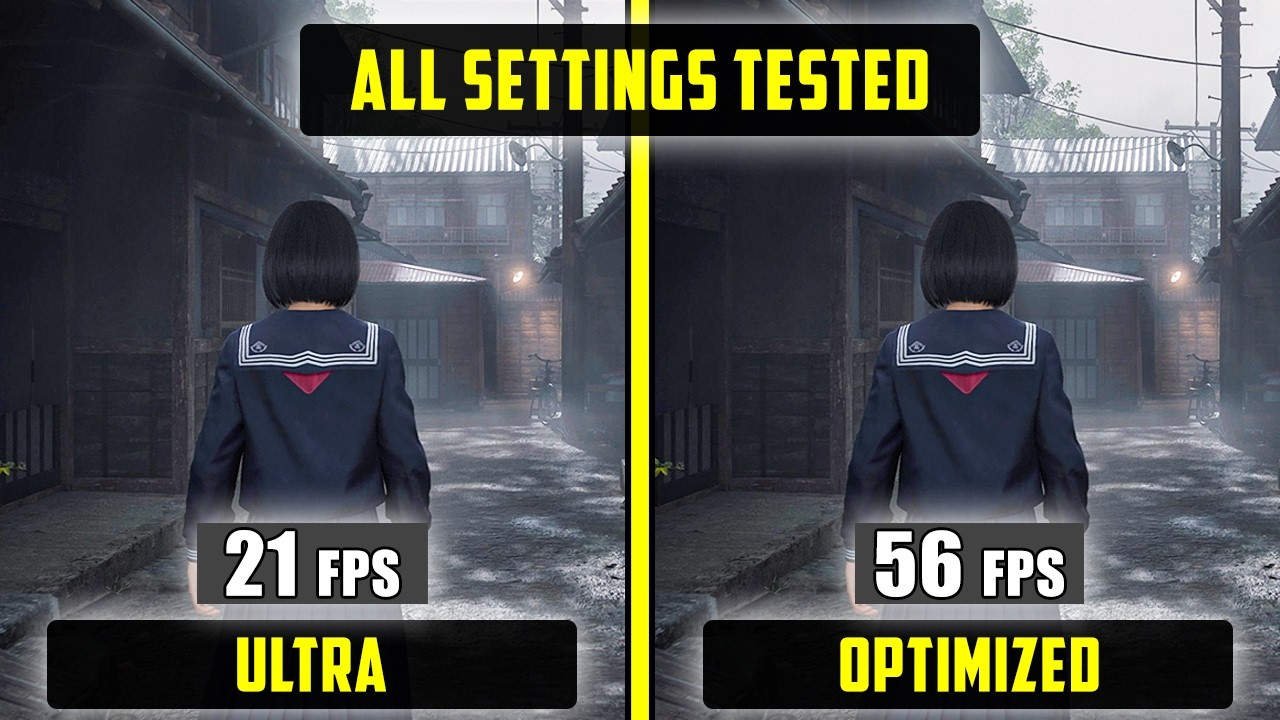
Proven PC Optimization Tips for Silent Hill f
Follow these expert-recommended settings to squeeze the best possible performance out of Silent Hill f on any system, aligning with best practices for Unreal Engine 5 games.
1. Use Upscaling (DLSS/FSR/XeSS)
This is the single most important setting. Enable DLSS (Performance/Quality), FSR, or XeSS in the graphics menu. The performance gain is monumental with a minor visual trade-off, essential for high frame rates.
2. Tweak Key Graphics Settings
Global Illumination: Set to "High" instead of "Epic" for a major FPS boost. Shadow Quality: Drop to "Medium." Post-Processing: Lower volumetric fog and motion blur. These offer the best performance-to-visual ratio.
3. Cap Your Frame Rate
Use NVIDIA Control Panel, AMD Adrenalin, or in-game tools to cap your FPS 3-5 frames below your display's maximum. This can prevent sharp drops from traversal stutters and create a more consistent feel.
The Importance of Patience on First Launch
Silent Hill f, like many UE5 games, compiles shaders during gameplay. Your first playthrough may have more stutters. Allow the game to compile fully (watch for a notification in the menu) or complete the initial areas. Subsequent playthroughs will be noticeably smoother. This is not a bug, but a characteristic of the engine's pipeline.
Final Thoughts on Silent Hill f PC Performance
Silent Hill f presents a modern, visually demanding take on the classic horror formula. While its PC performance isn't flawless, it is manageable and often excellent with the correct setup. High-end users should leverage upscaling for a smooth experience, while mid-range users will need to make smart graphical compromises. Players on low-end hardware should consider waiting for further optimization patches or console alternatives.
Disclaimer: This analysis is based on technical reviews, community feedback, and Unreal Engine 5 performance patterns. Individual experiences may vary based on specific driver versions, Windows updates, and system configurations. Always ensure your graphics drivers are up to date for the best experience.