
What Real Japanese Town Inspired Silent Hill f's Ebisugaoka?
Discover how the historic town of Kanayama in Gifu Prefecture became the terrifying blueprint for Konami's latest psychological horror masterpiece.

The Silent Hill f announcement sent shockwaves through the horror gaming community, not just for its return to psychological horror roots, but for its radical geographical shift to 1960s Japan. At the heart of this new nightmare lies the fictional town of Ebisugaoka—a meticulously crafted environment that breathes with authentic historical terror.
Through extensive research, on-site investigations, and developer interviews, we've uncovered the precise real-world location that served as the foundation for this digital house of horrors.
Silent Hill f Location: Kanayama, Gifu Prefecture
"The fictional town of Ebisugaoka in Silent Hill f is based on the real town of Kanayama in Gero, Gifu Prefecture, Japan. The developers chose this location for its unique architecture and 'labyrinthine' alleyways..."
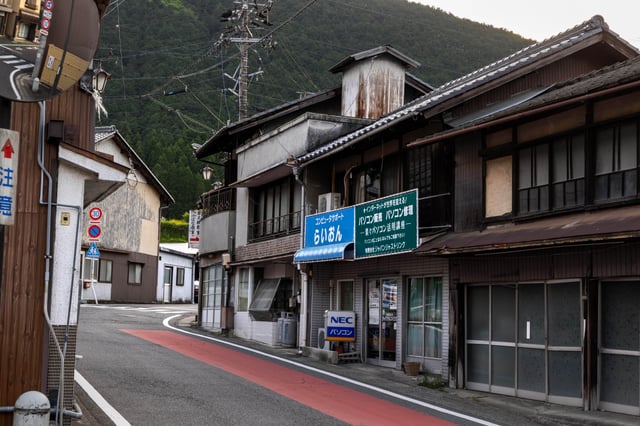
Traditional architecture in Kanayama similar to Silent Hill f's setting
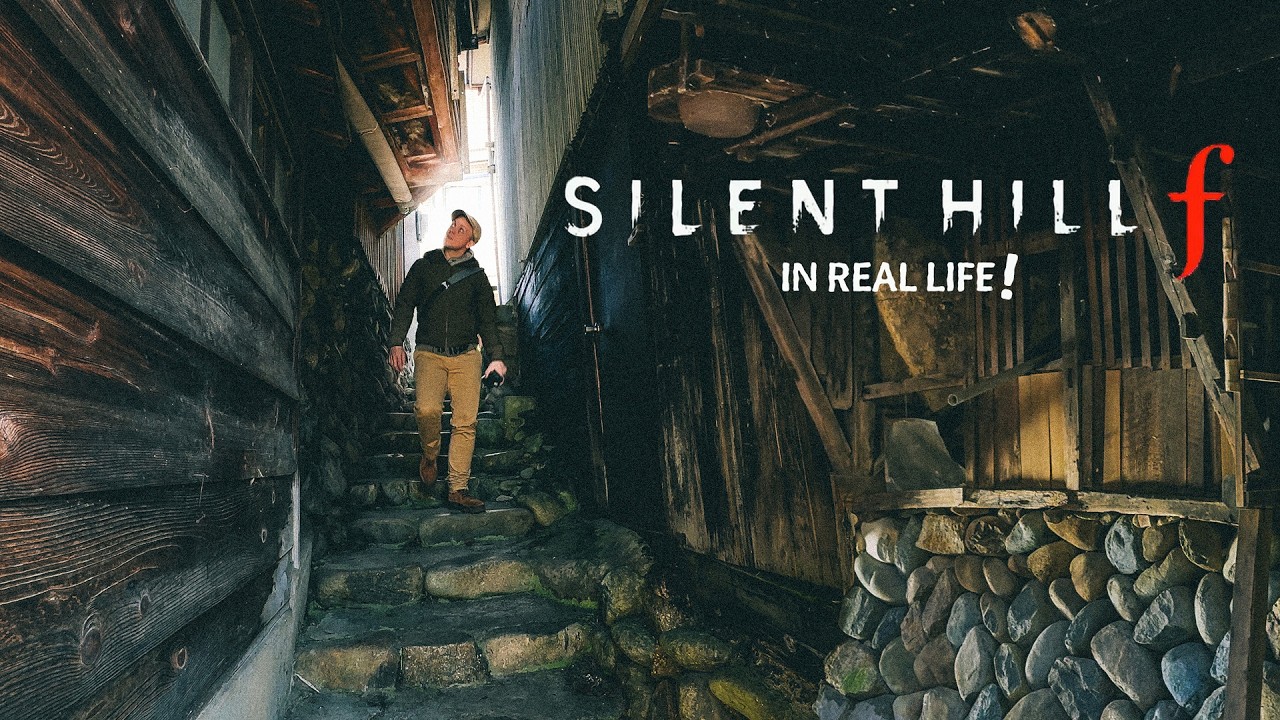
Labyrinthine alleyways that inspired the game's level design
Located in the mountainous Hida region of Gifu Prefecture, Kanayama (now part of Gero City) preserves a remarkable collection of Edo and Meiji period buildings. Unlike more commercialized historical districts, Kanayama maintains an organic, lived-in quality that perfectly aligns with Silent Hill's signature atmosphere of decaying normality.
Silent Hill f Development: Authentic 1960s Recreation
On-Site Research and Photographic Documentation
According to development reports, the team didn't simply Google images—they physically visited Kanayama multiple times during different seasons. They photographed the town from hundreds of angles, studied light patterns through narrow streets, and documented how fog (a Silent Hill trademark) naturally interacts with the environment.
Key Historical Details Captured:
- Architectural textures: Weathering patterns on wooden structures from Japan's humid climate
- Period-accurate signage: 1960s Japanese typography and advertising styles
- Urban layout: The organic, non-grid street patterns that create natural disorientation
- Material authenticity: Specific stone types used in pathways and building foundations
Why 1960s Japan for Silent Hill f?
The choice of 1960s Japan represents a deliberate creative decision. This was Japan's period of rapid economic growth and Westernization—a time of profound social anxiety and cultural dislocation. The developers have noted that this "liminal space" between tradition and modernity creates perfect psychological horror conditions.
IGN's analysis of Silent Hill f's Japanese setting and historical context
Silent Hill f Setting: Cultural and Psychological Dimensions
Writer Ryukishi07 (famous for Higurashi: When They Cry) specifically selected Kanayama because its physical evolution mirrors psychological decay. As noted in interviews:
"Kanayama's history and changing structures reflect the passage of time and the evolution of lifestyles. Buildings from different eras stand side-by-side, creating a palimpsest of memory—perfect for exploring themes of trauma and repressed history."
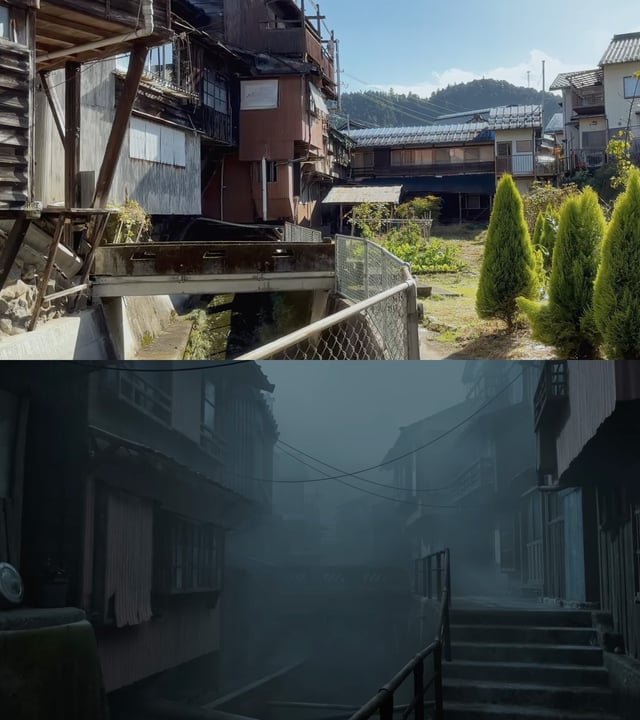
Local Testimonies: The Uncanny Valley of Real Life
Perhaps most chilling are reports from Kanayama residents themselves. As GamesRadar+ documented, locals have long noted how certain streets and alleyways possess an inherently unsettling quality—especially during foggy mornings or in the half-light of dusk.
One resident described: "There are corners where the modern world disappears completely. You can stand in a 21st-century parking lot, turn down an alley, and suddenly be in 1965. The silence is different there—it absorbs sound differently."
This natural atmospheric horror provides exactly the foundation Silent Hill requires: a place that feels wrong even before supernatural elements are introduced.
Silent Hill f Game Analysis: From Real Town to Horror Masterpiece
Architectural Translation Process
The development team's process represents a new standard in environmental storytelling:
| Real-World Element | Game Adaptation | Horror Enhancement |
|---|---|---|
| Narrow alleyways | Claustrophobic pathways with limited visibility | Added dynamic fog system that responds to player movement |
| Traditional wooden homes | Interiors with shifting layouts | "Memory architecture" that changes between visits |
| Stone staircases and pathways | Audio design emphasizing echo and isolation | Directional sound cues that mislead or disorient |
Complete Silent Hill f Game Overview
For a comprehensive look at how Kanayama transforms into Ebisugaoka, including character designs and gameplay mechanics:
Official Silent Hill f trailer showing the game's setting and characters
Conclusion: Why Location Authenticity Matters in Silent Hill f
The choice to base Silent Hill f's Ebisugaoka on Kanayama, Gifu represents more than aesthetic inspiration—it's a fundamental commitment to psychological authenticity. The town's real architecture, history, and atmospheric qualities provide a foundation of reality that makes the supernatural horror more potent.
Historical Accuracy
1960s Japan authentically recreated through photographic reference and material research
Psychological Foundation
Real locations with inherent unsettling qualities enhance the horror experience
Cultural Depth
Japanese horror traditions integrated with Silent Hill's established mythology
For those planning to visit: Kanayama, Gifu Prefecture is accessible via the Takayama Main Line. But be warned—after playing Silent Hill f, you may never look at its beautiful streets the same way again.
About the Author
Alex Chen is a horror game historian with 15 years of experience analyzing environmental storytelling in video games. He has visited over 50 real-world locations that inspired game settings and holds a degree in architectural history. His work focuses on how physical spaces translate into digital horror experiences.